The Mood of the Past Few Days
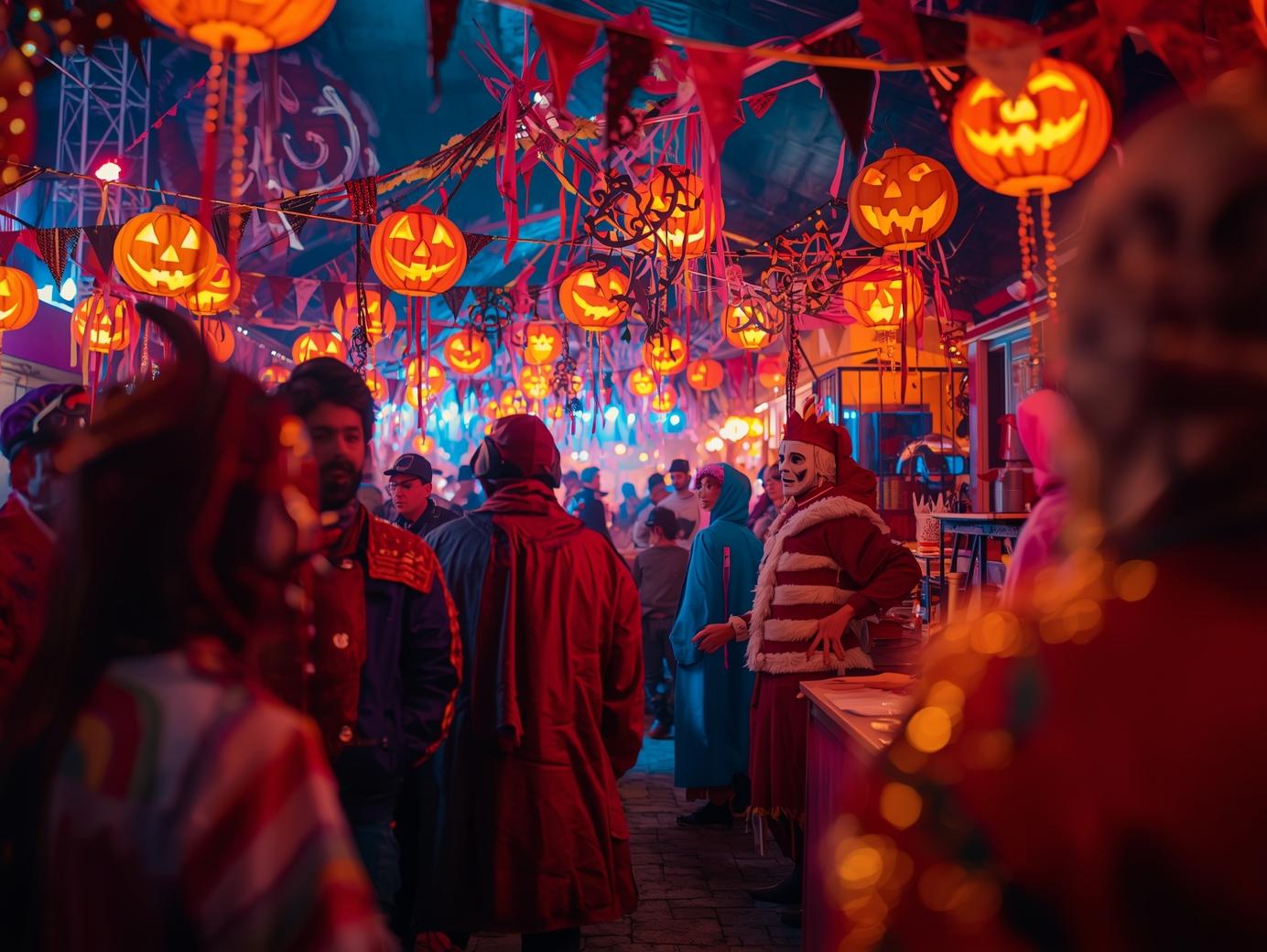
The city has been draped in orange light over the past few days.
Pumpkins in every window, the laughter of costumed children in the streets, small flickering candles in the cold evening wind.
Several districts organized pumpkin carving afternoons, face painting, children’s programs, and musical evenings—and visibly, more and more people are beginning to genuinely embrace Halloween as a true celebration.
Of course, there were those who frowned: “It’s just some American imitation.” But is it really? Or has something merely returned that we Europeans once knew well—but have since forgotten?
The Boundary Between Light and Darkness – Celtic Samhain
The roots of Halloween were established long before the United States.
More than two thousand years ago, during the time of the Celts, November 1st was celebrated as the beginning of the new year. The night preceding it, Samhain, was the boundary between light and darkness.
It was believed that on this night, the veil between the worlds would thin—allowing the souls of the living and the dead to cross more freely.
They lit bonfires, wore masks and costumes to ward off evil spirits, and laid out food and drink for their ancestors.
The pumpkin lanterns and costumes of today are therefore not self-serving fads—but modern imprints of ancient rituals that honored fear and celebrated life.
Jack, the Lantern, and the Fire That Is Eternal
The story of the famous “Jack O’Lantern” originates from an Irish legend.
It told of a cunning blacksmith, Stingy Jack, who outwitted the Devil multiple times.
After his death, neither Heaven nor Hell would accept him, so Jack was given a single ember by the Devil to wander in the dark.
He placed the ember inside a hollowed-out turnip—which became his lantern.
When the Irish emigrated to America, turnips were scarce, but pumpkins were plentiful. Thus the pumpkin lantern was born, which today is the most important symbol of Halloween.
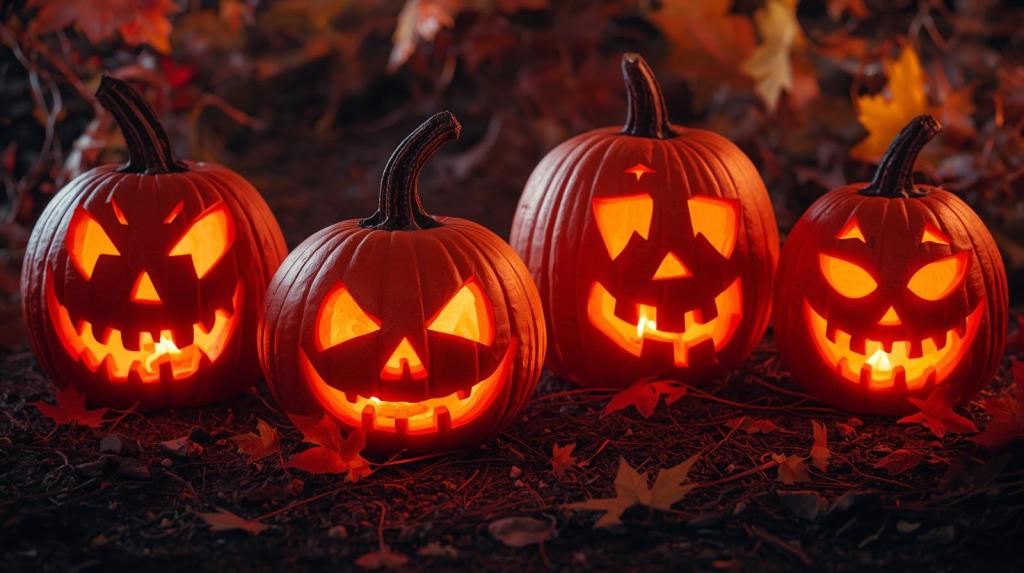
And while many view it as mere decoration, the pumpkin lantern is truly light in the darkness: a symbol of human courage, the acceptance of death, and respect for the afterlife.
“Solomon’s Pumpkin” – The Hungarian Jack-o’-Lantern
Few people know it, but a similar tradition existed in Hungary.
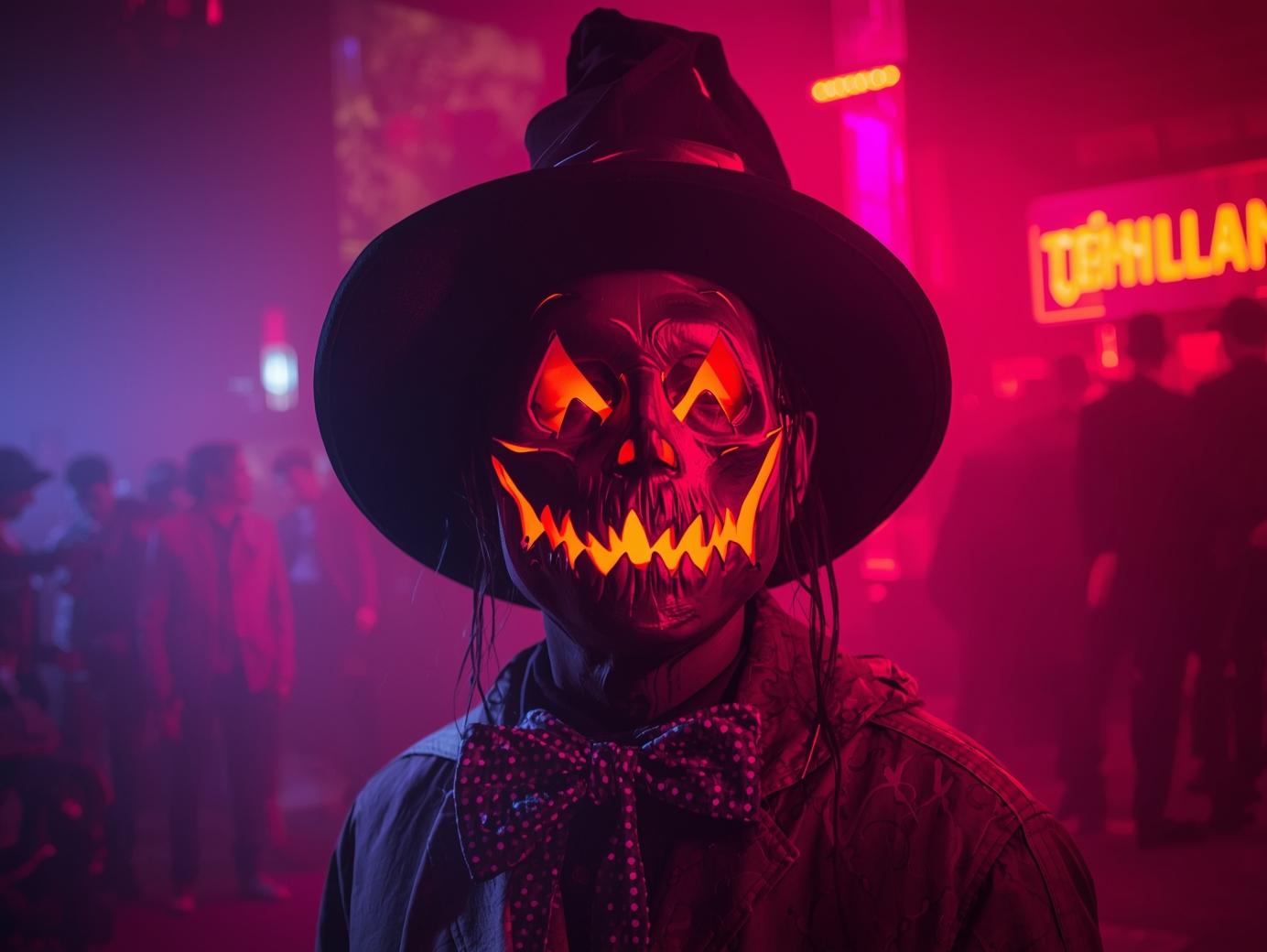
Village children, even around the turn of the 19th and 20th centuries, carved lanterns which they called “Salamon töke” (Solomon’s Pumpkin).
They placed a candle inside and went out at night to playfully scare people on the dark streets.
This playful folk custom gradually disappeared after the Second World War, partly due to the anti-religious atmosphere of the Soviet era and the rejection of Western culture.
However, it has been rekindled in the 2000s—and today, lanterns are being carved in many settlements again. Only now, it’s called Halloween.
“American Imitation”? Rather, Cultural Resonance
The globalization brought Halloween to us, but the word “imitation” is unfair to it.
After all, this celebration is European in origin. The United States only carried it forward, shaped it, and added color to it. And now we, too, are rediscovering it—in our own way, with our own atmosphere.
In the past few days, families, children, and communities gathered in different parts of the city to carve pumpkins, get face paintings, or simply to be together.
In some places, the program ended with good-natured games, in others with a musical or dance evening, or a costumed parade.
In some homes, a costume party elevated the evening, while in others, the program was simply a cozy night in with horror films, which have also become a fundamental element of this evening.
We are not importing anything. We are simply rediscovering the communal experience—the one we miss so much in today’s world anyway.

Two Sides, One Message: All Saints’ Day and Halloween
In the eyes of many, All Saints’ Day and Halloween are opposites: one is quiet, the other is noisy; one lights a candle, the other a pumpkin lantern.
But in reality, they are about the same thing. Both invoke the natural cycle of life and death.
One at the graveside, the other in the street. One with a prayer, the other with laughter.
The message is common: Darkness is not an enemy, only a reminder.
That every light we ignite—whether in the cemetery or inside a pumpkin—burns for someone we loved.
Conclusion – When the Light Remains
Now that the pumpkin lanterns have slowly gone out, and the city has returned to its usual rhythm, something has nevertheless remained.
The shared experience. The children’s laughter, the glow of the candles, the friendly conversations in the cool evening.
Perhaps someone sees only a trivial celebration in it, and another a small cultural renaissance—but what is certain is that it has soul again.
It is neither American nor Hungarian, but simply human.
“Perhaps only a pumpkin lantern flickered in the window. But sometimes that much light is enough not to fear the dark.”
If you liked this article, please give us some feedback to help us bring you more similarly interesting content!
Share in the comments what you think about this theme and want to read about!

 Glitched Mirror
Hozzászólás